
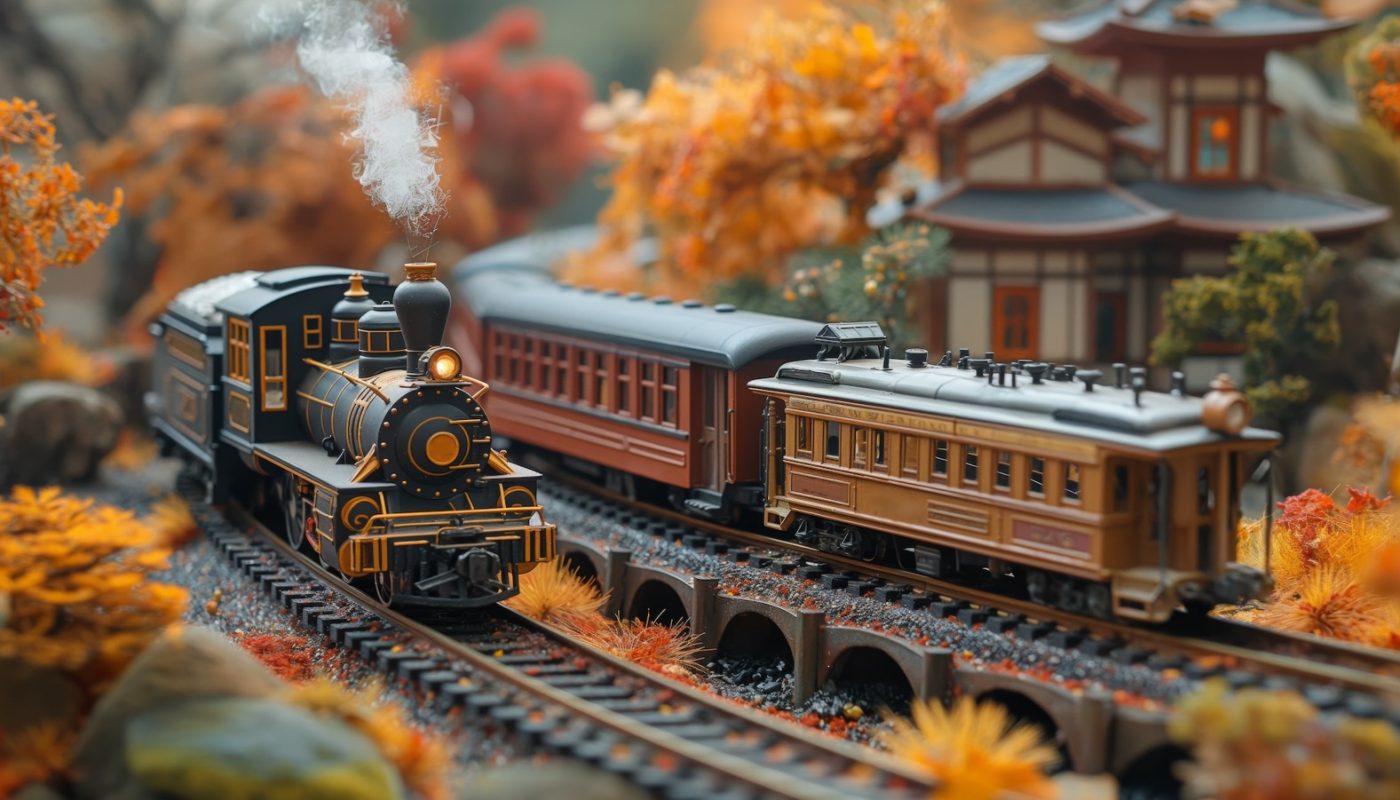
Model railroading has the unique capacity to unite several historical eras into a single artistic pastime. Using advanced electronics that have just recently been invented, a layout may replicate the ambiance of a 1940s railway town. Digital controls, programmable sound, and sophisticated lighting may coexist alongside steam locomotives, antique stations, old freight yards, and vintage passenger coaches.
Hobbyists have a lot of flexibility with this combo. Without being constrained by the technology available at the time, they are able to maintain the essence of a previous railway age.
Replicating The Feel Of Old Railways
A certain era is often the starting point for vintage inspiration. While some fans find the era of steam fascinating, others choose the switch to diesel engines or the vibrant passenger trains of subsequent decades.
Almost every visual choice may be influenced by the age. A particular era may be reflected in station architecture, locomotive designs, cars, advertising, signaling equipment, and even the attire of little characters.
When organizing these settings, old photos are very helpful. Hobbyists may research real train lines, industrial areas, mountain routes, or tiny town stations instead of building a generic railway. These sources provide suggestions for anything from adjacent structures to the location of the tracks.
Instead of just being a collection of trains, the outcome might become a small depiction of transportation history.
Contemporary Management Of A Vintage Appearance
Even if the landscape can depict a different period, the train can be operated much more sophisticatedly thanks to contemporary technologies.
Many layouts now operate differently due to digital command systems. It might be challenging to run several locomotives independently since traditional systems often controlled portions of track. Individual locomotives may receive orders for speed, direction, illumination, and other features thanks to modern digital technology.
Opportunities for more practical operations are therefore created. While one train transports cargo through a yard, another might wait next to a station. There is more freedom for many trains to run on the same layout.
As a result, a person visiting a model train store nowadays can come across models with remarkably sophisticated electronics inside that seem historically authentic on the exterior.
Sound Enhances The Immersion Of Miniature Railways
Another area where contemporary innovation enhances old authenticity is sound technology.
Locomotives are able to mimic the engine sounds of their real-world counterparts. Operators may hear diesel engines, whistles, horns, bells, brake noises, or the rhythmic exhaust of a steam locomotive, depending on the type and system.
The experience of seeing a train go through a layout is altered by these features. As the movement of a steam locomotive is accompanied by the proper mechanical noises, it becomes more realistic as it enters a station.
The model’s vintage look is preserved since the technology is mostly concealed.
Lighting Has The Power To Change An Entire Scene
What enthusiasts can make has also increased thanks to modern micro lights.
Without the need for large parts, small LEDs may light up passenger coaches, stations, streetlights, homes, industries, and railway yards. They may be integrated into very compact buildings and use comparatively little electricity.
A tale may also be told via lighting. Dim industrial lighting may create a whole distinct mood in a freight yard, while brilliantly lit stations may indicate nighttime customers waiting for the last departure.
In order to give operating sessions an additional degree of realism, some enthusiasts even gradually switch between daylight and nighttime circumstances.
Layout Planning Is Changing Due To Technology
Even before the first piece of rail is put in place, technology has an impact. Before committing to a physical design, enthusiasts may test out several track configurations using digital planning tools.
When working in a small environment, this may be quite useful. The likelihood of finding significant design flaws during construction may be decreased by carefully planning curves, switches, stations, sidings, and scenic sections.
Finer details have also been made possible by modern manufacturing. Highly accurate locomotive bodies, architectural pieces, accessories, and scenery may be produced using modern manufacturing techniques. Miniature versions of details that were previously hard for enthusiasts to replicate by hand are becoming more and more accessible.
Maintaining History Without Sacrificing Innovation
The fact that fans do not have to choose between innovation and nostalgia is perhaps the biggest advantage of contemporary model railroading.
Even with digital controls, synchronized music, effective lighting, and well-thought-out electronics, a train might seem to be from the steam period. The traditional nature of a pastime is not always replaced by technology. It may enhance the credibility of that persona when used carefully.
As a result, model railroading keeps developing while being closely tied to railway history. The technology working behind the scenes keeps the hobby boldly heading into the future, even if the locomotives and scenery may honor the past.