
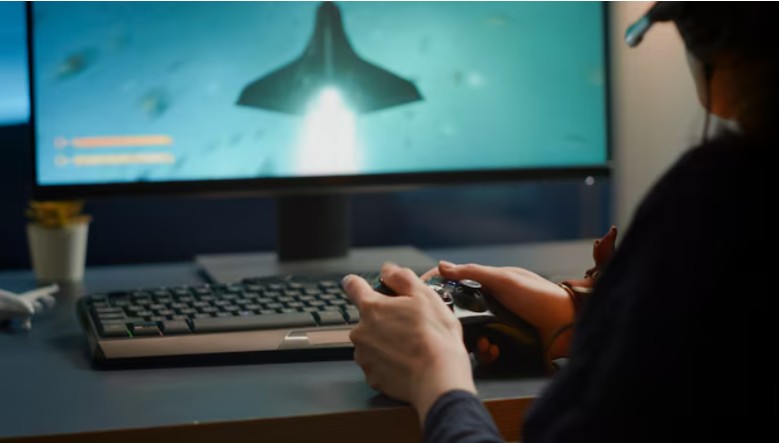
Online video gaming has evolved into a connected experience that allows players to compete, cooperate, and interact across a wide range of devices.
Whether someone plays on a gaming console, personal computer, smartphone, or tablet, the basic idea remains the same: the device connects to online servers, processes game data, and allows players to experience real-time gameplay with others.
Understanding how online gaming works across different devices helps explain why modern games can offer smooth multiplayer experiences despite differences in hardware, operating systems, and network capabilities.
The Basic Process Behind Online Gaming
Online video games rely on communication between a player’s device and remote game servers. When a player starts an online game on bandot88.net, several processes happen in the background:
- The device connects to the internet through a network connection.
- The game application communicates with the game server.
- Player actions, such as movement or commands, are sent to the server.
- The server processes the information and sends updated game data back to connected players.
- The device displays the results in real time.
Online Gaming on Personal Computers
Personal computers are among the most flexible platforms for online gaming. PCs can support a wide variety of games, from competitive multiplayer titles to large online worlds with thousands of players.
A computer’s performance depends on several hardware components:
| Component | Role in Online Gaming |
| Processor (CPU) | Handles game calculations and system tasks |
| Graphics card (GPU) | Creates visual effects and detailed environments |
| Memory (RAM) | Helps manage game data while playing |
| Storage | Stores game files and updates |
| Network hardware | Provides internet communication |
Console-Based Online Gaming
Gaming consoles provide a more controlled environment because manufacturers design both the hardware and the operating system. Popular console systems are built specifically for gaming, allowing developers to optimize performance more easily.
Online console gaming usually involves:
- Connecting the console to the internet through Wi-Fi or a wired connection.
- Creating an online gaming account.
- Downloading games, updates, and additional content.
- Joining multiplayer matches through online services.
Because console hardware remains consistent across devices of the same generation, developers can optimize games for predictable performance. This helps create stable experiences for players using the same console platform.
Mobile and Tablet Online Gaming
Mobile gaming has expanded online gaming to devices that people carry every day. Smartphones and tablets can now run multiplayer bandot88 games that support competitive matches, social interaction, and live events.
Mobile online gaming depends on:
- Device processing power.
- Battery performance.
- Touchscreen controls.
- Internet connection quality.
- Operating system compatibility.
Many mobile games are designed with shorter sessions in mind, making them suitable for quick gameplay. However, modern mobile devices are increasingly capable of supporting complex games with advanced graphics and online features.
Cross-Platform Gaming Between Devices
Cross-platform gaming allows players using different devices to play together in the same online environment. For example, a player on a computer may compete with someone using a console or mobile device if the game supports this feature.
To make cross-platform gaming possible, developers need to manage differences between devices, including:
- Control methods, such as keyboards, controllers, and touchscreens.
- Hardware performance differences.
- Screen sizes and resolutions.
- Operating system requirements.
- Account synchronization.
The Role of Cloud Technology in Online Gaming
Cloud technology has introduced new possibilities for online gaming by reducing dependence on local hardware. Cloud gaming services allow games to run on powerful remote computers while players stream the experience to their devices.
This approach can allow users to play demanding games on devices that may not have enough processing power to run them traditionally. However, cloud gaming requires a reliable internet connection because gameplay depends heavily on continuous data streaming.
Security and Online Gaming Connections
Since online games involve constant communication between devices and servers, security is an important part of the gaming experience. Developers use different methods to protect player accounts, game data, and online environments.
Players can improve security by:
- Using strong and unique passwords.
- Enabling additional account protection features.
- Avoiding suspicious links and downloads.
- Keeping games and devices updated.
Conclusion
Online video gaming works across different devices by connecting players, game applications, and servers through internet-based systems. While computers, consoles, and mobile devices have different hardware and features, they all follow the same basic principle of sending and receiving game information in real time.
As technology continues to improve, online gaming is becoming more accessible, allowing players on different platforms to enjoy connected gaming experiences from almost anywhere.