
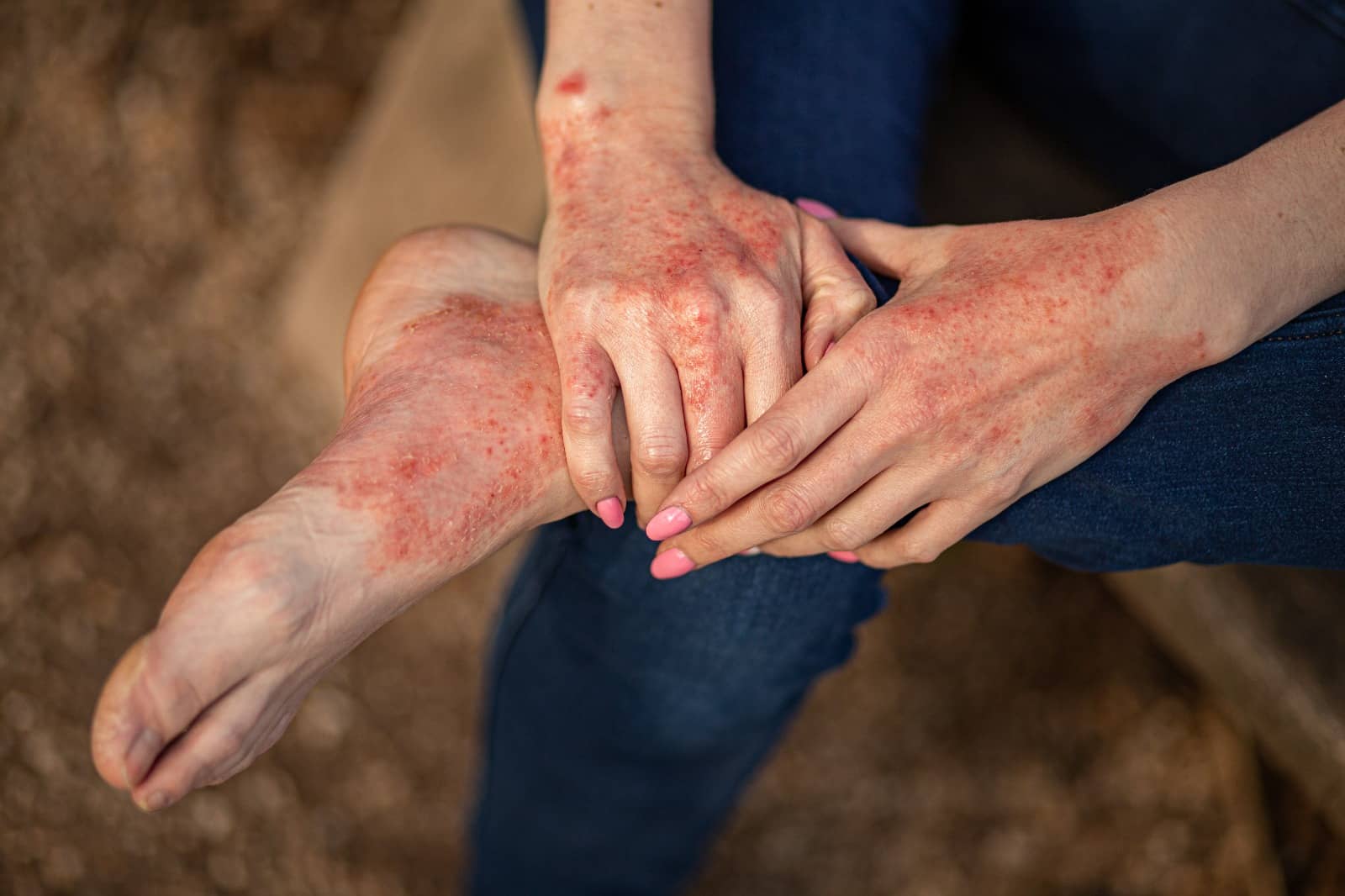
Winter often triggers or worsens eczema due to the combination of cold air, low humidity and indoor heating, which can dry out the skin and damage its natural barrier. People with atopic dermatitis or contact eczema may experience more itching, redness, cracking and a higher risk of infection during this season. Reduced exposure to sunlight, heavier clothing and changes in hygiene habits can further aggravate symptoms. This article explains why eczema flares in winter, practical home care, red flags for specialist review and when to consider seeing a dermatologist.
Why Eczema Worsens in Winter – Key Mechanisms
Colder months affect skin health in multiple ways, contributing to dryness and inflammation.
- Barrier Disruption: Cold, dry air and indoor heating reduce skin moisture, leading to dryness, itching and irritation.
- External Irritants: Frequent hot showers, harsh soaps and wool or synthetic clothing may strip natural skin oils and trigger flares.
- Immune Activation: Dry skin leads to tiny cracks that allow allergens and microbes to penetrate, causing inflammation.
- Behavioural Factors: Spending more time indoors increases exposure to dust mites, pet dander and indoor allergens.
Common Presentations and Clinical Impact
Understanding typical symptoms and complications helps guide appropriate treatment.
- Typical Signs: Intense itching, redness, scaling, dry patches, fissures and occasional fluid oozing. Common areas include hands, face, neck and skin folds.
- Secondary Infection: Persistent scratching may cause infection. Signs include yellow crusts, pus, spreading redness or fever.
- Impact on Daily Life: Eczema can disrupt sleep, concentration and emotional well-being.
- Prognosis: With proper moisturising, trigger control and treatment, most flares are manageable. Untreated eczema may lead to thickened skin or pigment changes.
Practical Winter Skincare – Daily Routine
A consistent skincare routine helps protect the skin barrier and reduce flare-ups.
- Gentle Cleansing: Use mild, fragrance-free cleansers rather than harsh soaps.
- Moisturising Immediately After Bathing: Apply a thick emollient within three minutes of bathing to lock in moisture.
- Warm, Short Showers: Limit showers to five to ten minutes and avoid hot water.
- Breathable Clothing Layers: Wear cotton next to the skin and avoid wool or rough fabrics on affected areas.
- Night-Time Care: Apply moisturiser generously before sleep, and cotton gloves may help reduce scratching on the hands.
- Humidify Indoor Air: Use a humidifier or place a bowl of water near heaters to maintain moisture in the environment.
- Use Gentle Detergents: Choose fragrance-free laundry products and wash new clothing before wearing.
When Over-the-Counter Care Is Not Enough – Red Flags to See a Dermatologist
Certain symptoms may require specialist attention to prevent complications or worsening of the condition.
Book a dermatologist near me if you notice:
- Rapidly spreading redness, warmth or fever
- Yellow crusting, pus or signs of infection
- Severe itching that affects daily life or sleep
- Thick, darkened skin that limits movement
- Possible allergic reactions to new skincare or fabrics
You may also consult a dermatologist in Bangalore for in-person evaluation if symptoms persist despite home care.
What a Dermatologist Will Do – Assessment and Tests
A structured evaluation helps diagnose severity and guide treatment.
- Medical History: Includes symptom duration, triggers, past treatments, allergies and family history.
- Physical Examination: Assessment of skin appearance, pattern and any signs of infection.
- Targeted Tests: Skin swabs or cultures for infection, patch testing for suspected contact allergies and blood tests in select cases.
- Severity Scoring: Tools such as EASI or IGA help plan treatment intensity and follow-up.
Medical Treatments and Expected Outcomes
Treatment is based on the severity and type of eczema.
- Topical Treatments: Dermatologists may prescribe topical corticosteroids for flares and steroid-sparing agents for sensitive areas.
- Emollients and Barrier Repair: Regular emollient use remains essential for preventing dryness and flare-ups.
- Systemic Treatments: Severe or unresponsive eczema may require immunomodulators or biologic therapy under specialist supervision.
- Infection Management: Topical or oral antibiotics may be given for secondary bacterial infection. Antiviral treatment may be required for eczema herpeticum.
Practical Advice for Hand and Facial Eczema
Extra care for exposed and sensitive areas helps control flare-ups.
- Wear cotton gloves under protective gloves during household chores or wet work.
- Avoid introducing multiple new facial products at once.
- Apply sunscreen daily to prevent pigmentation and irritation from cold winds and UV exposure.
- Keep a diary to track flare triggers such as weather, detergents or stress.
Preparing for Your Dermatology Consult
Preparation helps your consultation be more effective and informative.
- List current skincare products, medications and any allergy history
- Bring photos of flare-ups if symptoms fluctuate
- Carry previous prescriptions or reports
- Prepare questions about treatment duration, steroid use, patch testing or maintenance therapy
Search for dermatologist near me, top dermatologist near me or dermatologists near me to book an appointment. You may also consult a dermatologist in Bangalore if an examination or procedure is required.
Conclusion
Winter eczema is common but manageable with consistent moisturising, trigger avoidance and timely dermatology advice. If symptoms become severe, infected or interfere with sleep and daily activities, consulting the best dermatologist near me ensures early treatment and better control. You may also seek help from a dermatologist in Bangalore for in-person care and long-term skin health.