
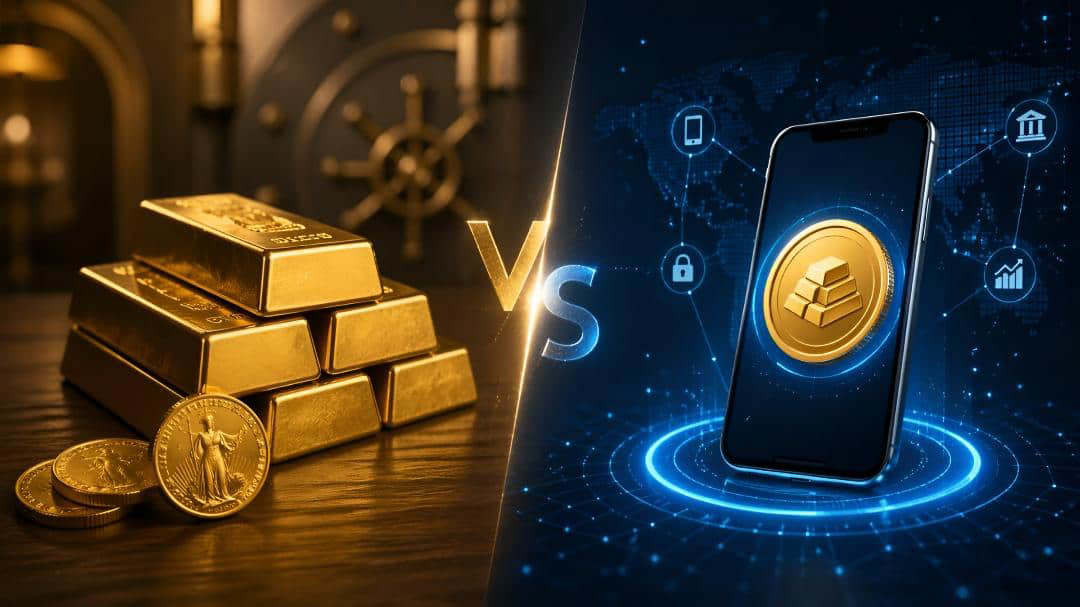
Are we living in a digital world? Absolutely. We shop online, work online, bank online, and even socialise through screens. But here’s a question worth asking: does something being digital automatically make it better?
That’s exactly the debate many investors are having right now. Digital gold platforms are becoming more popular, and cryptocurrencies like Bitcoin are often compared to traditional gold. But before you follow the trend, it helps to slow down and ask a few important questions.
If Everything Is Digital, What Happens When Systems Fail?
Let’s start with something simple. What happens if your phone breaks? Or your internet goes down? Or an app suddenly stops working?
Digital gold only exists inside a platform. You can’t touch it, store it, or hold it in your hand. That raises an interesting question: is something truly valuable if you can only access it through a screen?
Physical gold doesn’t rely on passwords, apps, or servers. If you choose to buy gold, you own something real. No logins, no technical glitches, no “temporary outages.” It simply exists, regardless of what’s happening online.
Do You Really Own Digital Gold?
Here’s another question that often gets overlooked: when you buy digital gold, do you actually own the gold itself?
In many cases, what you really own is a claim. The gold is stored somewhere by a company, and you rely on them to keep it safe, track it accurately, and allow you to access it whenever you want. That works perfectly until something goes wrong.
With physical gold, ownership is simple. If it’s in your hand, it’s yours. No middleman, no platform, and no dependency on someone else’s system.
Is Convenience Always Better Than Security?
Digital gold is undeniably convenient. You can buy or sell it in minutes. But here’s the bigger question: is convenience more important than security?
Think about it this way. Would you store your most valuable possessions only online? Most people wouldn’t. They might use digital tools for speed, but they still rely on physical assets for long-term safety.
That’s one of the biggest reasons investors still buy gold in physical form. It isn’t about rejecting technology. It’s about balancing convenience with something stable and dependable.
Can Digital Assets Replace Something That Has Worked for Centuries?
Gold has been trusted for thousands of years. It survived economic crashes, wars, currency collapses, and political changes. So the real question becomes this: can something that only existed for a few years really replace something that has worked for centuries?
Digital gold platforms are still evolving. Regulations change, companies appear and disappear, and new technologies replace old ones. Physical gold, on the other hand, doesn’t depend on trends. It remains valuable whether the economy is booming or struggling.
Are We Confusing “Modern” With “Better”?
In a digital world, it’s easy to assume that newer automatically means better. But is that always true?
Sometimes modern tools improve things. Other times they simply change the way something looks without improving its core value. When you choose to buy gold, you’re not just buying an asset. You’re choosing something that has stood the test of time, not something that depends on software updates and online platforms.
What Feels More Secure to You?
Let’s end with a simple question. Would you feel more secure knowing your gold exists in an app, or knowing it’s physically stored somewhere you control?
For many people, the answer is obvious. Digital platforms may be faster and more convenient, but physical gold offers something far more important: certainty.
So yes, we are living in a digital world. But when it comes to protecting your wealth, sometimes the most reliable option is the one you can actually hold in your hand.