
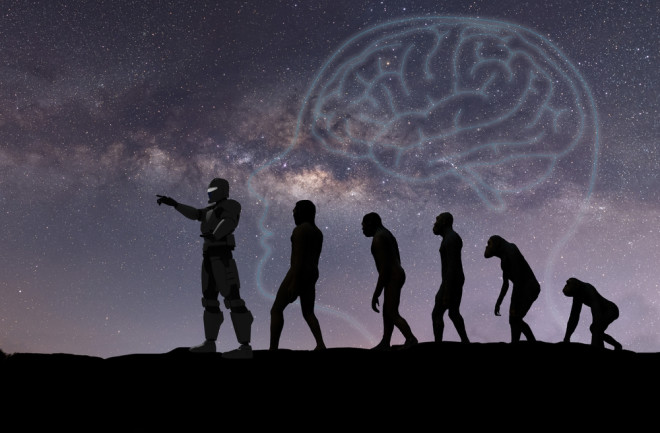
For most of modern history, evolution has been understood in physical terms. It has been described as a slow process shaped by biology, genetics, and natural selection. Over time, human beings adapted to their environments. The body changed. The brain expanded. Survival improved.
But today, a different question is starting to take shape.
What if the next phase of human evolution is not physical at all?
What if it is based on consciousness?
This idea is no longer limited to philosophy or spirituality. It is beginning to show up in neuroscience, psychology, and human performance research. Scientists are discovering that the brain is not fixed. It is constantly adapting, responding to attention, behavior, and experience. That means evolution may no longer occur only over thousands of years. It may be something that unfolds within a single lifetime.
A Moment That Changes Perspective
There was a simple moment that illustrates this shift.
A person sat in traffic after a long day. The road was crowded. The cars barely moved. Frustration built quickly. The body tightened. The mind started replaying the day, imagining delays, creating tension that made the situation feel worse.
Then something changed.
Instead of reacting, the person paused. They noticed their breathing. They relaxed their shoulders. They stopped resisting the moment. Within seconds, the experience shifted. The traffic did not change, but the stress disappeared.
What changed was not the environment.
It was awareness.
That small shift reflects something much larger. It shows how perception, emotion, and response are not fixed. They are flexible. And that flexibility may be the key to the next stage of human development.
The Shift From Physical to Conscious Evolution
In earlier stages of human history, survival depended on physical strength, coordination, and basic intelligence. Over time, the brain evolved to handle language, social systems, and complex problem-solving.
Today, those basic survival needs are often met. The challenges people face now are different.
Stress. Anxiety. emotional overload. lack of clarity.
These are not physical limitations. They are patterns within consciousness.
This is where evolution appears to be shifting. Instead of adapting to the external world, humans are beginning to refine their internal world. Awareness itself is becoming the focus.
The Brain Is Not Fixed
Neuroscience has made one thing very clear. The brain is constantly changing.
This process, known as neuroplasticity, allows neural pathways to strengthen or weaken based on repeated use. Thoughts, behaviors, and emotional patterns shape the brain over time.
If someone lives in constant stress, the brain becomes more reactive. If someone practices calm awareness, the brain becomes more stable.
Studies have shown that meditation can physically change brain structure. Research has found increased activity in areas linked to attention and emotional regulation, along with reduced activity in regions associated with fear.
These are not small changes. They affect how a person experiences the world on a daily basis.
This suggests something important.
Human development is no longer limited to physical evolution. It can be guided through awareness.
Consciousness as an Active Force
If the brain responds to attention, then consciousness is not passive.
It becomes an active force in shaping experience.
Attention influences perception. Perception influences behavior. Behavior shapes outcomes. Over time, these patterns create long-term changes.
This means evolution is no longer something that simply happens to humanity.
It is something humanity participates in.
Taansen Fairmont Sumeru has described this shift as a shift from unconscious reaction to conscious awareness. In his view, the real transformation is not external but internal. As awareness becomes more stable, the quality of decision-making improves, and that improvement carries into every system people create.
From Reaction to Response
One of the clearest signs of this shift is the growing ability to respond instead of react.
In a reactive state, the mind moves quickly. Fear triggers defensive behavior. Stress creates urgency. Decisions are made without reflection.
In a more developed state of awareness, there is space.
That space allows for clarity. It allows for choice.
Returning to the earlier traffic example, the difference lay not in the situation itself. It was in the response to it. That small gap between stimulus and reaction is where evolution may now be taking place.
When that gap expands, people begin to act with more intention and less impulse.
A New Baseline of Awareness
As individuals develop greater awareness, their baseline state begins to change.
Instead of living with constant low-level stress, they experience more calm. Instead of mental noise, they experience clarity. Instead of emotional volatility, they experience stability.
This is not a temporary state. It becomes a new normal.
Research supports this idea. Long-term meditation practitioners exhibit different baseline brain activity than non-practitioners. Their nervous systems are less reactive. Their attention is more stable.
This suggests that consciousness itself can evolve into a more refined state.
Rethinking Progress
If evolution is shifting toward consciousness, then the way progress is measured may also need to change.
Traditionally, progress has been defined by technological, economic, and physical advancements. While these are important, they do not fully capture human development.
A society can be technologically advanced and still struggle with stress, conflict, and confusion.
A more complete measure of progress would include the quality of awareness.
Clarity. emotional stability. the ability to cooperate. the ability to think long-term.
These qualities reflect a more evolved state of consciousness.
Where This Is Leading
This shift does not happen all at once. It unfolds gradually through individual changes that accumulate over time.
Interest in meditation continues to grow. Conversations about mental health are becoming more common. Research into consciousness is expanding.
These trends point toward a clear direction.
Human evolution is moving inward.
This does not replace physical or technological progress. It supports it. As awareness improves, the systems built by that awareness become more effective and more stable.
Evolution Becomes a Choice
Perhaps the most important aspect of this shift is that it introduces choice.
If consciousness can evolve, then individuals are no longer passive participants in the process.
Every moment of attention shapes the brain. Every reaction or response reinforces a pattern. Every decision reflects a level of awareness.
Evolution becomes something that can be influenced in real time.
That may be the defining feature of this new phase.
Evolution is no longer only about adapting to the world.
It is about becoming more aware within it.